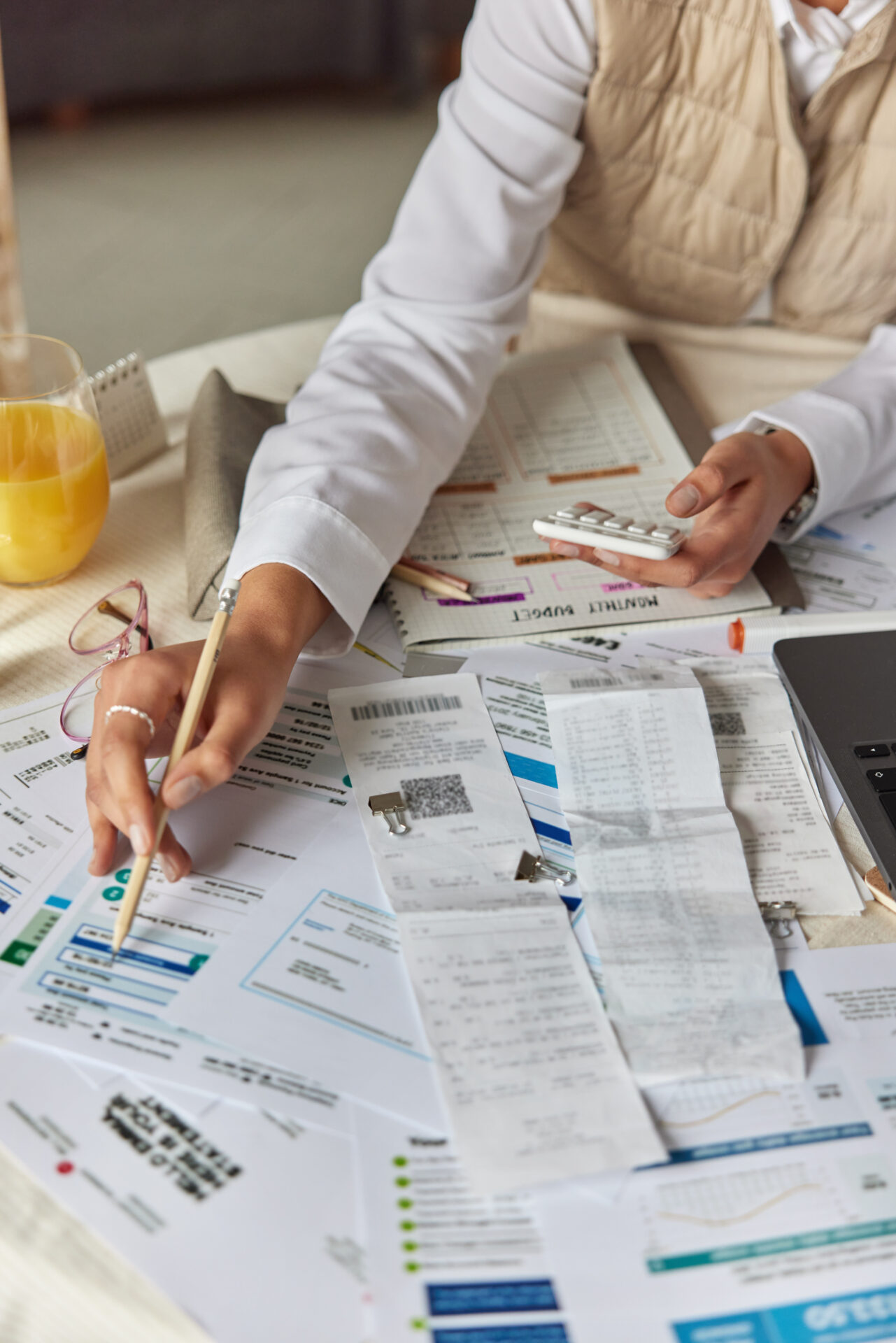
Irregular bills never fit into tidy monthly budgets. That’s where most of us start losing track of our money. Property taxes, car insurance, annual subscriptions, and holiday spending can absolutely wreck your plans if you treat them like curveballs.
But honestly, they’re not surprises. They’re predictable, just not on a nice, neat schedule. If you don’t plan for them, you’ll end up raiding your emergency fund or swiping your credit card when they pop up.

The best budgeting categories for irregular bills break down these random expenses into monthly chunks, so you’re never scrambling for cash when a bill lands. I’ll walk you through the must-have categories, how to figure out what to set aside each month, and which tools actually help you stay on top of it all. You’ll see how to build sinking funds, track irregular expenses without complicated spreadsheets, and finally avoid that stress when a bill you forgot about comes due.
Key Takeaways
- Split irregular bills into clear categories like insurance, home maintenance, medical costs, and annual subscriptions
- Add up your yearly irregular costs and divide by twelve to dodge budget shocks
- Use sinking funds or separate savings accounts to set aside cash for these bills before they hit
Understanding Irregular Bills in a Personal Budget

Irregular bills don’t follow a monthly pattern. They’re not like your rent or phone bill. You need a different budgeting approach for these, one that accounts for timing and amount.
The trick is knowing what counts as irregular, how these differ from variable expenses, and why ignoring them just creates financial stress.
What Counts as an Irregular Bill?

An irregular bill is any expense that doesn’t show up every month or doesn’t arrive in the same amount each time. Your car insurance might bill you every six months for $600. That’s irregular, even though you know it’s coming.
Property taxes, HOA fees, and annual memberships like Amazon Prime or Costco fit here too.
Some irregular expenses are predictable, just infrequent. You know your vehicle registration is due every April for about $150. You can plan for these by tracking when they hit and what they cost.
Other irregular bills sneak up on you. Your dog suddenly needs an emergency vet visit for $400, or your water heater dies and costs $1,200 to replace. Medical copays, car repairs, and home maintenance often land in this unpredictable group.
Common irregular bills include:
- Car insurance (semi-annual or annual)
- Property taxes
- HOA fees
- Annual subscriptions
- Car registration and inspections
- Holiday gifts
- School expenses
- Medical copays and procedures
- Home repairs
- Car maintenance
Difference Between Variable and Irregular Expenses

Variable expenses happen every month, but the amount changes. Your grocery bill might be $450 one month, $520 the next, but you’re still buying groceries every month. Your electric bill goes up and down with the seasons, but it’s always there.
Irregular expenses skip months. You’re not paying car insurance in February, March, April, or May if your policy renews in January and July. That’s the main difference: monthly frequency versus random timing.
This matters because variable expenses need wiggle room each month, while irregular expenses need you to set aside money months ahead of time. If you spend $300 on groceries one week and $400 the next, you can adjust. But if you owe $600 for car insurance in January and nothing until July, you need to save $100 every month to cover it.
A lot of people mix up the two and get caught short when irregular bills arrive. They budget for monthly and variable costs but totally forget about the insurance bill that comes twice a year.
Why Planning for Irregular Expenses Matters

Irregular bills can destroy your budget because they feel like surprises, even though you know they’re coming. You might know your car insurance is due in January, but if you haven’t been saving, suddenly you need $600 all at once. That means pulling from savings, skipping other bills, or reaching for a credit card.
Look through your spending from the past year to find these expenses. Check your bank statements and credit card records. Write down every non-monthly expense, when you paid it, and how much it cost.
You’ll probably find $3,000 to $5,000 a year in irregular expenses you weren’t planning for.
Add up your annual irregular expenses and divide by 12. If you spend $3,600 per year, you need to set aside $300 every month. This turns unpredictable costs into a steady monthly budget item.
Open a separate savings account for irregular expenses if your bank lets you. Set up an automatic transfer for the monthly amount. When the car insurance bill arrives, the money’s already there—no stress.
If you don’t do this, irregular bills often lead to debt. You put them on a credit card because you don’t have the cash, then you’re paying interest on stuff you knew was coming. Planning ahead helps you dodge that trap.
Core Budgeting Categories for Irregular Bills

Irregular bills usually land in four main groups: housing costs like property taxes and homeowners insurance, insurance premiums that bill quarterly or annually, transportation expenses like car repairs and registration, and healthcare costs such as dental and vision care.
Breaking these into specific buckets makes it easier to track what you owe and when.
Housing Expenses Paid Annually or Semi-Annually
Property taxes usually hit once or twice a year, depending on where you live. These often range from $1,200 to $6,000 annually. If your mortgage doesn’t include escrow, you need to save this up yourself. Divide your annual bill by 12 and put that amount aside each month.
Homeowners insurance often bills annually or semi-annually, usually $800 to $2,000 per year. Renters insurance is similar, just cheaper—about $150 to $300 per year. Some landlords also bill water and sewer quarterly, which can run $200 to $400 per cycle.
HOA dues sometimes come quarterly or annually. These range from $500 to $3,000 per year, depending on your neighborhood. Create a separate savings bucket for each of these so you’re not caught off guard.
Insurance Premiums With Non-Monthly Schedules

Car insurance companies love to push monthly billing, but they charge you $5 to $15 extra each month for the privilege. A six-month premium might be $600 upfront, but $660 if you pay monthly. That’s $120 a year just to avoid saving.
Life insurance and disability insurance usually bill annually. A $500,000 term life policy might run $300 to $600 a year. Disability insurance can be higher—often $600 to $1,500 annually depending on coverage.
Health insurance from the marketplace usually comes monthly, but if you’re self-employed, you might have quarterly tax payments to cover premium credits. Umbrella insurance almost always bills annually at $200 to $500 for $1 million in coverage.
Set up a dedicated savings account for insurance. Move the monthly amount over automatically, so you’re ready when the bill lands.
Irregular Transportation Costs

Car repairs never follow a schedule, but most people spend $500 to $1,200 a year, depending on the car’s age. Tires need replacing every 3 to 5 years at $400 to $800 for a full set. State inspections cost $20 to $50 annually, while registration fees vary from $30 to $200 based on your location and car.
Public transportation passes sometimes offer deals for quarterly or annual purchases. A monthly subway pass might be $120, but an annual pass could drop that to $100 a month, saving you $240 a year.
Parking fees for work or school often bill by semester or year. A parking permit could be $600 per year instead of $60 monthly, skipping processing fees.
Budget at least $100 a month for vehicle maintenance and repairs, even if nothing seems wrong. After six months, you’ll have $600 ready for that brake job or battery.
Healthcare and Medical-Related Bills

Dental care usually means two cleanings a year at $80 to $200 per visit without insurance. Add another $200 to $500 if you need X-rays or minor work. Dental insurance might cost $300 to $600 a year but often covers cleanings.
Vision care is similar. An eye exam costs $50 to $150 annually, and glasses or contacts add $150 to $400. Vision insurance usually runs $120 to $200 a year and covers one exam plus eyewear discounts.
Medical devices like CPAP supplies, diabetic strips, or hearing aid batteries create irregular but predictable costs. A CPAP user might spend $300 to $500 on supplies every three months. Insurance deductibles reset each year, so if yours is $2,000, you might get hit with that in January after a hospital visit.
Track your healthcare spending for a year. Most people spend more than they realize because these bills show up at random times.
See Related: Energy Efficient Upgrades on a Budget Save Money Fast With Proven Fixes
Other Important Irregular Expenses to Plan For

Some expenses don’t show up every month but can still derail your budget. Subscriptions renew when you least expect it, school costs arrive in waves, and gift-giving occasions pile up faster than you’d think.
Annual and Seasonal Subscriptions

Monthly streaming services like Netflix or Hulu are predictable, but annual subscriptions catch you off guard. A $99 Amazon Prime renewal in April, $120 for Costco in September, and a $180 gym membership in January can total $399 spread across three months.
Set aside $15-30 a month in a dedicated account for these renewals. Check your email and credit card statements from last year to spot every subscription.
Magazine subscriptions, software licenses, domain hosting, and professional memberships all fit here. A gym might charge $10 a month but add a $50 annual enrollment fee. Streaming services now push annual plans that save money but require $80-150 upfront.
Track renewal dates in your phone calendar and set a 30-day reminder. That gives you time to decide if you still need it or want to shop for a better deal.
Education and School Fees

Tuition, registration fees, and school supplies create big expense spikes if you have kids or take classes yourself. A typical back-to-school shopping trip costs $200-500 per child. Registration fees for sports, music, or after-school programs run $50-300 per activity per semester.
College tuition is due twice a year, usually August and January. Even with aid, you might owe $2,000-5,000 per semester.
Start a monthly transfer of $100-200 per child into an education fund. That covers August supplies, spring field trips, yearbooks, and test fees like AP exams or SATs.
Don’t forget tech fees, lab fees, parking passes, and activity cards. A high schooler might need $35 for parking, $20 for an activity card, and $50 for calculator rentals in the first month alone.
Charitable Giving and Gifts

Holiday gifts and charitable donations might feel spontaneous, but honestly, they’re pretty predictable if you look at your habits. Most families drop anywhere from $500 to $1,500 on December holidays alone. Then there are birthdays, graduations, weddings, and baby showers that pop up all year.
Just count up the folks you usually buy for and multiply by $30 to $75 per person. Toss in wedding gifts at $75 to $150 a pop, and baby shower gifts at $40 to $75. If you hit three weddings and five birthdays every year, you’re already at $425 to $825 before December even rolls around.
Charitable donations deserve their own spot in your budget too. Maybe you give $25 each month to a food bank or mail off a $300 check at the end of the year. Either way, plan for it—don’t just use whatever’s left over.
Set up a separate savings account and move $75 to $150 into your gift fund every month. When your niece’s birthday sneaks up or a coworker ties the knot, you’ve got the cash ready. This habit keeps you from letting “just one more gift” sneak onto your credit card.
Savings and Sinking Funds for Irregular Bills

Sinking funds help you break up big, irregular bills into manageable monthly bits. Meanwhile, an emergency fund is there for real surprises you just can’t see coming. These two work together, but they don’t do the same job.
How to Use Sinking Funds Effectively

Start by listing every irregular bill you know will hit in the next 12 months, along with the due date and cost. Maybe car registration lands in July for $180, annual subscriptions in March for $240, and homeowner’s insurance in November for $1,200. Add it all up, then divide by 12 to get your monthly sinking fund goal.
Put that amount aside each month into clearly labeled categories. Use subaccounts at your bank, a budgeting app, or even a simple spreadsheet. Keep each fund separate so you don’t accidentally spend holiday cash on car repairs.
Here’s a real-world example: If you need $300 for winter utilities, $400 for quarterly property taxes, and $600 for gifts over the year, that’s $1,300 total, or about $108 per month. Save that $108 every month, and those bills won’t blindside you.
When a bill comes due, pull from the matching sinking fund. If you guessed too low, adjust your monthly savings for next time. Most people miss by 10 to 20% in their first year, so it’s smart to add a little buffer if you can.
Choosing the Right Savings Account

A high-yield savings account usually works best for sinking funds, since your money earns a bit of interest and stays easy to access. Look for accounts paying at least 4% APY, with no monthly fees or minimums.
Many online banks let you open multiple subaccounts under one main savings account. Ally Bank, Marcus by Goldman Sachs, and Capital One 360 all offer this for free. You can have one subaccount for car maintenance, another for medical bills, and a third for annual subscriptions.
Skip checking accounts for sinking funds—they barely pay any interest. Also, avoid CDs or investment accounts, because you’ll need to get to this money quickly when bills arrive. Sinking funds aren’t for building wealth; they’re just for smoothing out your cash flow.
If your bank doesn’t do subaccounts, open separate high-yield savings accounts at different banks. Just make sure each is FDIC-insured up to $250,000 and lets you move money to checking easily.
Emergency Fund Versus Sinking Fund

Your emergency fund covers real surprises—like losing your job, sudden medical bills, or a major home repair that comes out of nowhere. Sinking funds are for expenses you can see coming, even if they’re not monthly, like car registration or quarterly taxes.
Financial advisors usually say to keep 3 to 6 months of essential expenses in your emergency fund, tucked away in a high-yield savings account you barely touch. If your rent, utilities, groceries, and minimum debt payments total $2,400 a month, aim for $7,200 to $14,400 in emergency savings.
Sinking funds help you avoid dipping into your emergency fund for stuff you really should have planned for. If you use emergency savings for Christmas gifts or back-to-school shopping, you’re robbing your own safety net.
Try to build both at once, even if you’re starting small. Maybe put $50 toward your emergency fund and $50 toward sinking funds each month, until you’ve got at least one month’s expenses saved. Then you can shift more to sinking funds while still adding to your emergency stash. This way, you don’t feel like you’re only saving for boring bills, and you still protect yourself from real crises.
See Related: How to Budget with Irregular Income and Still Reach Your Financial Goals
Tools and Methods for Managing Irregular Budget Categories

Managing irregular bills takes a system that keeps your money separate before you get tempted to spend it. The right budgeting tools help you set cash aside for those not-so-monthly expenses—whether you love physical envelopes, digital apps, or just a basic spreadsheet.
Envelope System and Cash Buckets

The envelope system means you literally split your cash into labeled envelopes for each irregular expense. Maybe you have one for car insurance, another for holiday gifts, and a third for home repairs.
Every payday, stuff a bit into each envelope based on your spending plan. When that annual insurance bill lands, the money’s already waiting. This method takes out the guesswork and keeps you from “borrowing” from other funds.
Digital “cash buckets” do the same thing, but inside your bank account or budgeting app. Many banks let you create multiple savings buckets in one account. You name each bucket (car registration, vet bills, property taxes) and transfer money right into them on payday.
The best part is you can see exactly how much you’ve got for each expense. The downside? It’s easier to dip into digital buckets than to break open a real envelope.
Budgeting Apps and Spreadsheets

Budgeting apps like YNAB, EveryDollar, and Goodbudget make the bucket system automatic and track your spending in real time. These apps connect to your bank and sort transactions as you go.
YNAB is made for giving every dollar a job—including those irregular expenses. You assign money before you spend it, which fits how these bills actually work. The catch? There’s a subscription fee and a bit of a learning curve.
A budget spreadsheet is free and puts you in control. Set up columns for each irregular expense, the annual cost, and the monthly amount you need to save. Update it weekly or monthly as you go. Google Sheets templates can handle the math if you set them up once.
Apps are great for convenience and real-time tracking. Spreadsheets win for cost and flexibility. It really comes down to whether you want automation or total control.
Tracking Your Spending Consistently

Setting money aside only works if you actually track what you spend. Check your irregular expense categories at least twice a month to make sure the cash is still there and nothing unexpected has drained it.
Set calendar reminders for when irregular bills are coming up. Add them a couple of weeks before the due date so you can move money from your bucket to checking without scrambling.
Every three months, review your irregular spending. Compare what you planned with what you actually spent. If your car repair fund always runs dry, you’re underestimating—bump up your monthly savings.
Don’t aim for perfection. The goal is just to close the gap between your plan and real life. Small tweaks now save you headaches later.
Tips for Staying on Track With Irregular Expenses

Setting up payment automation and doing an annual review of your budget categories keeps irregular expenses from blowing up your monthly budget. These habits turn surprise bills into just another part of your money routine.
Automating Irregular Bill Payments

Automatic payments save you from missing irregular bills when life gets busy. Set up auto-pay through your bank or directly with service providers for predictable bills like semi-annual car insurance, annual HOA fees, or quarterly water bills.
Make sure these payments pull from a dedicated savings account where you’ve been stashing money every month. If your car insurance costs $600 every six months, set up a $100 monthly transfer to your irregular expense account. Then schedule that $600 payment to come from the same account when it’s due.
Watch out for variable expenses like home repairs or medical co-pays. These don’t work well with auto-pay since the amounts change. Keep a buffer fund for these and pay them manually as they come up.
Check your auto-pay settings every few months. Companies sometimes bump up rates without warning, and you need to adjust your monthly savings to keep up. If you miss this, your automated payment could overdraft your account or force you to dip into emergency savings.
Re-Evaluating Categories Each Year

Life changes, so your budget categories for irregular bills need a yearly checkup. Every March, pull up last year’s bank statements and credit cards to see which irregular expenses actually happened and what they cost.
You’ll probably spot expenses you forgot about. Maybe you now spend $800 on youth sports fees or your pet’s vet bills jumped from $300 to $600 because your dog is getting older.
Set up a simple spreadsheet with three columns: expense name, last year’s actual cost, and the monthly savings needed. This will show you exactly what to set aside for each category. If property taxes went up by $400, you need to save an extra $33 a month starting now.
Drop any categories that don’t fit anymore. If you paid off your car and dropped full coverage, put that money toward something else that’s underfunded. If your vehicle maintenance costs dropped because you bought a newer car, that frees up cash for other goals.
See Related: Retirement Budget Categories for Beginners: Spend Wisely on What Matters
Frequently Asked Questions

Irregular bills always bring up the same headaches about timing, tracking, and how to make it all work when money’s tight. Here are some practical answers you can actually use this week—not just someday.
How can I plan my budget to accommodate unexpected expenses?
Add a monthly line item called “irregular expenses” right between your fixed bills and your fun money. Figure it out by adding up what you spent on car repairs, doctor visits, pet care, and home fixes last year, then divide by 12. If you spent $2,400, that’s $200 a month.
Move that $200 into a separate savings account or subaccount as soon as you get paid. Label it in your banking app so you don’t accidentally spend it. When the water heater breaks or you need a dental crown, just pay from that account instead of scrambling or swiping your credit card.
The first year probably won’t be spot-on. Maybe you set aside $200 a month and realize you really need $275. That’s not failure—it’s just good info for next year. Adjust and keep going.
What are some effective strategies for managing irregular bills within a tight budget?
Start by sorting out which expenses are truly irregular and which just feel that way because you haven’t tracked them. Car insurance might only come up twice a year, but you know exactly when and how much. Annual subscriptions, property taxes, and HOA fees are the same. List every one with its due date and amount.
Divide each bill by the number of months until it’s due. For example, a $600 insurance premium due in six months means you need to save $100 a month. A $1,200 property tax bill due in ten months needs $120 a month. Add up all the monthly amounts for your total.
If that total is more than you can handle right now, focus on the bills with the earliest due dates and highest late fees. Maybe you fully fund car insurance and property taxes but only put a little toward holiday spending this year. Even $25 a month is better than nothing.
For unpredictable stuff like car repairs or medical bills, average your last three years if you can. If your car cost $900 one year, $1,200 the next, and $600 last year, budget about $900 a year—or $75 a month.
Can you suggest some budgeting tips for dealing with fluctuating utility costs?
Start by tracking your utility bills for a full year. Figure out the average monthly cost, and use that as your utility budget.
When your bills come in lower than average, stash the extra in a savings bucket labeled for utilities. If a bill jumps one month, pull from that fund to cover the difference.
Let’s say your electric bill averages $110 but jumps from $70 in April to $160 in August. Budget $110 every month. When April’s bill is only $70, toss the extra $40 into your utility fund. In August, grab $50 from that fund to cover the higher bill.
This way, your checking account sees the same $110 leaving every month. It keeps the rest of your budget steady, which is honestly a relief.
Some utility companies actually offer budget billing programs that average your payments for you. They’ll charge you the 12-month average each month, then settle up at the end of the year. If you’re comfortable with their math and don’t mind them holding your surplus during the low months, it’s a pretty easy option.
If you notice your utilities spike because of things like drafty windows or an ancient fridge, crunch the numbers. Maybe weatherstripping costs $200 but saves you $30 a month on heating. That’s a break-even point in about seven months.
Swapping out a 15-year-old refrigerator could cut $10 to $15 off your electricity bill every month. Sometimes, a small upgrade pays for itself surprisingly fast.
What budget categories should I prioritize to prepare for unforeseen financial demands?
Start with the basics: housing, transportation, insurance, and medical. These are the categories that can wreck your finances quickest if you ignore them.
For housing, don’t just think about rent or your mortgage. If you own, set aside money for repairs and maintenance, too. The usual rule is 1% of your home’s value per year. So, for a $250,000 place, you’d want about $2,100 a year—or $175 a month—saved up for things like appliances, roof fixes, or HVAC work.
With transportation, keep track of insurance, registration, inspections, regular maintenance, and repairs. If you drive an older car, expect to spend $800 to $1,200 a year on repairs unless your mechanic says otherwise. That’s $65 to $100 a month.
Insurance can sneak up on you since premiums often hit once or twice a year. List out each policy, its premium, and due date. Divide the total by 12 to get your monthly amount. For example, $600 every six months for car insurance means you should set aside $100 a month. If your home insurance is $1,200 per year, that’s another $100 monthly.
Medical expenses can add up, too. Think about deductibles, copays, and anything insurance doesn’t cover. If your family’s deductible is $3,000 and you usually meet half, set aside $125 a month. Add $50 to $100 more if you have regular prescriptions, glasses, or dental costs.
Once you’ve got those four categories covered every month, then add in things like holidays, gifts, school expenses, and memberships. They’re important for your happiness, but missing them won’t throw you into a financial crisis.
In what ways can I categorize my spending to better track and control irregular expenses?
Try grouping irregular expenses by function instead of by frequency. It just makes tracking a lot less confusing, and honestly, your decisions get a bit easier too.
For example, you can throw insurance, registration, inspections, oil changes, tires, and repairs into one “vehicle” category. Then, put property taxes, HOA dues, maintenance, small repairs, and appliance replacements into a “home and property” category. For health, gather insurance premiums, deductibles, copays, prescriptions, and any out-of-pocket dental or vision costs together. And don’t forget a “life events” category—holidays, birthdays, weddings, travel, and gifts all fit there.
Within each category, keep track of what you add and what you spend. A basic spreadsheet does the trick. You just need a column for monthly deposits, one for withdrawals, and another for your running balance. Update it whenever you toss in money or pay a bill. Honestly, it takes maybe three minutes per transaction.
If spreadsheets sound like a headache, you could always pick a bank that lets you set up subaccounts or “buckets” inside your main account.
Leave a Reply