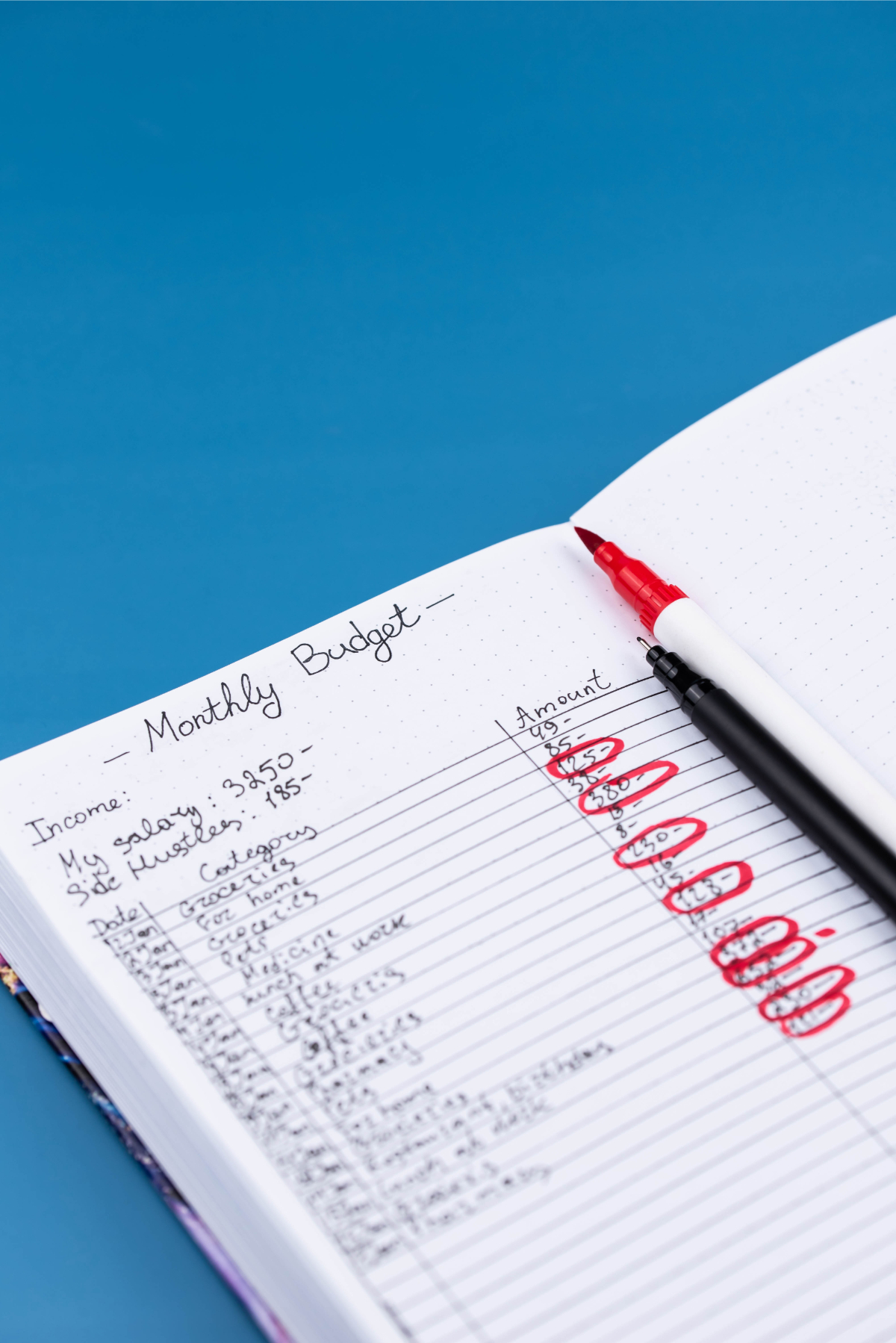
A few years back, I found myself buried in credit card debt, even though my paycheck looked pretty good on paper. It hit me—my real issue wasn’t how much I earned, but that I had absolutely no frugal budget in place.
Like so many folks, I assumed budgeting meant giving up everything fun. That thinking just kept me stuck, overspending, and worrying about money every month.

A frugal budget is just a spending plan that puts your needs first but still leaves space for what you love most. It’s not about living like a hermit or cutting out every joy. You get to be intentional with every dollar, so you can spend less, save more, and finally chip away at debt, without feeling like you’re missing out.
You’ll start by figuring out your income and expenses, then picking a method that fits your life. You’ll learn to track every dollar, set honest financial goals, and spot ways to cut costs without killing your happiness.
And honestly? Tweaking just a few spending habits can make a huge difference in your financial future.
Key Takeaways
- A frugal budget helps you spend with purpose: needs first, but fun isn’t banned.
- You’ll need to track every cent, then pick a method that works for your real life.
- Check in on your budget regularly—adjust when you need to, and watch your savings grow.
Understanding Frugal Budgeting and Its Benefits

A frugal budget plan focuses on smart spending instead of just slashing everything, so you can prioritize needs and build financial security. This approach helps you build habits that last, and it seriously cuts down on stress.
What Is a Frugal Budget Plan?

A frugal budget plan is just a way to make your money go further by trimming the stuff you don’t care about, so you can keep what truly matters. Unlike a boring “track every penny” budget, frugal budgeting means you’re actively looking for ways to spend less, without sacrificing your quality of life.
Start by listing every source of income and all your monthly expenses. Then, break things into needs and wants.
Needs? Think housing, food, utilities, and transportation. Wants? That’s streaming, eating out, new clothes—stuff you can live without if you had to.
Here’s where it gets interesting: you approach each category differently. For groceries, maybe you meal plan and buy store brands.
Entertainment? You might pick free stuff like hiking or library events. You’re not banning fun, just finding smarter ways to enjoy it.
A lot of people use a 50/30/20 split: 50% to needs, 30% to wants, 20% to savings and debt. If you’re all-in on building wealth, maybe you go 60/20/20. Play with the numbers until it fits your goals.
Key Benefits of Frugal Living

Frugal living doesn’t just pad your savings—it changes your life in ways you might not expect.
- Financial Security: You build up emergency funds faster and feel less stressed. Shave $200 off your monthly spending? That’s $2,400 extra in a year.
- Debt Freedom: More cash goes to paying off credit cards or loans. You’ll save a ton on interest over time.
- Goal Achievement: Whether you’re saving for a house, a trip, or something else, frugal budgeting gets you there faster.
- Reduced Stress: When you’re in control of your money, you sleep better. Seriously, peace of mind is underrated.
- Better Spending Habits: You think twice before buying random stuff you don’t need.
- Environmental Impact: Buying less and choosing better quality means less waste. That’s good for your wallet and the planet.
Frugal Mindset vs. Deprivation

Let’s get real—the biggest myth about frugal budgeting is that it’s all about misery and giving up everything you like. That’s just not true.
A frugal mindset means you make intentional choices. You pause and ask, “Does this line up with my goals?” Maybe you’ll splurge on a $50 concert because music is life, but skip the $5 coffee shop habit and make your own at home.
Deprivation mindset? That’s when you cut every bit of fun. It never works for long—nobody can live like that.
You’ll see the difference in your daily choices. A frugal person might invite friends over for a potluck instead of dropping $60 at a restaurant. Someone stuck in deprivation mode might just stay home and skip the fun entirely.
Frugal living boosts your happiness because you’re spending on what matters most. If you cut your $200 dining-out budget to $100, you now have $100 extra for travel or a hobby.
Don’t forget to budget for fun and hobbies. The point is to spend less, not nothing. That’s the secret to making frugal living a lifestyle you want to keep.
1. Clarifying Your Income and Expenses

Knowing exactly how much cash comes in and goes out every month is the backbone of any frugal budget. You’ll want to get real about your take-home pay, side gigs, and every single expense—from the mortgage to your Netflix subscription.
Identify Your Reliable Income Sources

Kick things off by listing all the money you can count on every month. That’s your main job, but don’t forget steady side income.
If you get alimony, child support, or rental income, jot down the exact amounts. Only count it if it’s consistent.
Social Security, disability, pension checks—those go on the list too. Even a small $200 side gig adds up over time.
Skip the “maybe” money for now. If you might get freelance work next month, leave it off. Only count what you know is coming.
Stick to the money you’re sure will hit your bank account each month. This way, you won’t end up overspending based on wishful thinking.
Determine Take-Home Pay and Side Hustles

Forget your gross salary—what matters is what you bring home after taxes and deductions.
Grab your latest pay stub and look for the net income. That’s your real monthly budget number.
If you get paid weekly, multiply by 4.33. Paid every two weeks? Multiply by 2.17. That’ll give you your monthly take-home pay.
Side hustles need their tracking. Maybe you drive for Uber and make $300 a month, or sell crafts for $150.
Keep good records, since side gig income can jump around. Use a three-month average to be safe.
Don’t forget taxes on side income. If you haven’t paid them yet, knock off about 25% for Uncle Sam.
List Fixed and Variable Expenses

Your monthly expenses fall into two camps: fixed and variable.
Fixed expenses never change. That’s your rent or mortgage, car payment, insurance, and phone bill.
List them out:
- Rent: $1,200
- Car payment: $350
- Insurance: $125
- Phone: $75
Variable expenses bounce around each month. Groceries might be $400 one month, $500 the next.
Common variable expenses:
- Groceries and household stuff
- Utilities (electric, gas, water)
- Gas for your car
- Entertainment and eating out
- Subscriptions you can cancel
Dig through three months of bank statements to get honest averages. Maybe groceries average $450, utilities $180.
Annual expenses like car registration or Amazon Prime? Divide them by 12 and add that to your monthly budget.
2. Categorizing and Tracking Every Dollar

If you want a frugal budget that works, you’ve got to know where your money is going. Track every expense and sort them into clear categories to spot savings opportunities.
Tracking Spending Habits

For at least a month, write down every single purchase. Yes, even the $4 latte or the $2.99 app you forgot about.
Use a budget spreadsheet or expense tracker app. You can whip up a quick worksheet with columns for date, amount, description, and category. Google Sheets or Excel are free and do the job.
Track these daily:
- Cash buys (save your receipts)
- Credit card swipes
- Debit card use
- Online payments
- Auto withdrawals
Check your bank statement each week to catch anything you missed. Patterns start to pop up after just a couple of weeks.
Don’t beat yourself up during this phase. You’re just collecting info, not judging your habits (yet).
Categorize Expenses: Needs vs. Wants

Now, sort your expenses into needs and wants. This is where you’ll find wiggle room.
Needs:
- Housing (rent, mortgage, insurance)
- Utilities (electric, water, gas)
- Food/groceries
- Transportation
- Minimum debt payments
- Basic clothes
Wants:
- Eating out
- Streaming and entertainment
- Hobbies
- Trendy clothes
- Vacation savings
Get specific—break “food” into “groceries” and “restaurants.” The more detail, the easier it is to see where your cash leaks out.
Use a budget template that splits fixed costs (same every month) from variable ones (change monthly). Rent is steady, groceries can swing.
Find Hidden and Discretionary Spending

Scan for subscriptions and little purchases you forgot about. These sneaky expenses can add up to $100–$200 a month, easily.
Watch out for:
- Streaming services you don’t use
- Gym memberships you’ve ditched
- App subscriptions
- Automatic renewals
- Bank fees
Look closely at your discretionary spending. Those $15 Target “just because” buys add up. Small daily treats—vending machine snacks, convenience store drinks—can cost you $50–$75 a month.
Use your budget sheet to catch these habits. You might be spending $40 a month at coffee shops or $60 on forgotten subscriptions.
Add a “miscellaneous” category for those weird little purchases under $10. They don’t fit anywhere else, but they still matter.
See Related: Genius Frugal Living Hacks to Save Thousands
3. Choosing a Frugal-Friendly Budgeting Method

Picking the right budgeting method can change everything. The best approach is the one you’ll actually stick with, and each one has perks for keeping your frugal lifestyle on track for the long haul.
50/30/20 Rule Simplified

The 50/30/20 rule sorts your after-tax income into three buckets. You put 50% toward needs, 30% toward wants, and stash 20% for savings.
Needs mean rent, groceries, utilities, and minimum debt payments. Wants? Think dining out, hobbies, or that streaming service you love. The last 20% heads straight for savings or extra debt payments.
If you’re chasing frugality, you can flip this formula. Try 50% for needs, 20% for wants, and crank savings up to 30%. You’ll build wealth faster, and honestly, you probably won’t feel like you’re missing out.
Let’s crunch some numbers. If you bring home $3,000 after taxes each month, here’s how both budgets shake out:
| Category | Standard Rule | Frugal Version |
|---|---|---|
| Needs | $1,500 (50%) | $1,500 (50%) |
| Wants | $900 (30%) | $600 (20%) |
| Savings | $600 (20%) | $900 (30%) |
This method’s great if you like things simple. No need to track every latte or tank of gas.
Zero-Based Budgeting Explained

Zero-based budgeting gives every dollar a job before you spend it. When you subtract all your planned expenses from your income, you hit zero.
Start with your take-home pay. List out fixed costs—rent, car payment, insurance. Then divvy up what’s left for groceries, fun, and anything that changes from month to month. Funnel the leftovers into savings or debt.
You’ll find this method makes you intentional with your money. You can’t just spend on autopilot; every dollar needs a purpose. If you want to micromanage your cash, this is the way to go.
Zero-based budgeting takes a bit more work upfront. Expect to spend half an hour to an hour each month mapping it out. But it’s worth it for the clarity.
Be honest with your categories. If you usually spend $150 on groceries, don’t pretend you can get by on $50. Start with your real habits, then trim slowly.
Envelope System and Cash Budgets

The envelope system means you use cash for certain spending categories. You’ll label envelopes for groceries, gas, entertainment, and fill them with exactly what you plan to spend.
When the envelope’s empty, you stop spending in that category. It’s a natural limit—no credit card “oops” moments.
Not a cash fan? Try digital envelopes. Some folks use separate checking accounts or budgeting apps. Same idea—when the money’s gone, you wait.
This method’s a lifesaver for impulse spenders. Cash feels real. You see it leave your hands.
The envelope system shines for things like groceries and entertainment. For fixed bills like rent, just set up automatic payments.
Start with just two or three envelopes for your trickiest spending areas. Add more once you get the hang of it.
4. Setting Financial Goals and Automating Progress

Clear financial goals give your frugal budget meaning. Emergency savings keep you from going into debt when life gets weird, and paying off debt frees up your cash for better things.
Create Achievable Saving Goals That Motivate

Start with savings goals you can hit. If you’re new to this, shoot for $500 in emergency savings instead of $5,000. Small wins build confidence.
Break big goals into bite-sized pieces. Want to save $1,200 for a vacation? Put away $100 a month for a year. Suddenly, it feels doable.
Try the 1% rule for a quick win. If you earn $3,000 a month, start by saving just $30 (that’s 1%). When that feels easy, bump it up. Little victories add up.
Set up automatic transfers so that saving happens in the background. Send $50 to savings every payday. If you never see it, you won’t spend it.
Track your progress visually. Use a chart or app to watch your savings grow. Seeing your stash go from $300 to $400 is more motivating than you’d think.
Mix short-term and long-term goals. Save for a quick weekend away, but also chip away at that retirement fund. The quick wins make the long haul feel less daunting.
Build an Emergency Fund First

Your emergency fund comes first, always. This is your shield against using credit cards when things go sideways.
Start with $500. That’ll handle most minor disasters—car trouble, urgent doctor visits, you name it. Once you hit $500, aim for $1,000.
Aim for 3-6 months of expenses eventually. If your bills run $2,500 a month, you’ll want $7,500 to $15,000 tucked away. Sounds wild, but you’ll get there one step at a time.
Keep this money somewhere separate. A high-yield savings account works well—harder to dip into, but still easy enough to grab in a pinch.
Only use emergency funds for actual emergencies. A shoe sale doesn’t count, but a busted water heater sure does.
If you dip into the fund, rebuild it right away. Spent $400 on a car repair? Make topping up your emergency fund your next priority.
Plan for Debt Repayment and Reduction

Debt payments suck money away from your goals. Make a plan to pay off debt and take your cash back.
List every debt—balance, minimum payment, and interest rate. It’s not fun, but you need to see what you’re up against.
Pick the snowball or avalanche method. With snowball, you pay off the smallest debt first for a quick win. An avalanche means you tackle the highest interest rate first to save more overall.
Snowball works for motivation. Knocking out a $300 card feels awesome, even if your $8,000 balance is lurking. Sometimes, a little emotional boost matters more than perfect math.
Throw extra money at your debt whenever you can. Find $50 in your budget? Put it toward debt, not dinner out. Every extra payment gets you closer to freedom.
Set a payoff date for each debt. If you owe $2,000 and pay $100 a month, adding just $67 more cuts your timeline in half. Small changes make a big difference.
5. Cutting Costs and Boosting Your Savings

If you want to win at frugal budgeting, you’ve got to know where your money’s going. Then, start rerouting it toward your savings goals. Skip the stuff you don’t care about, and get creative with the rest.
Strategies to Reduce Unnecessary Spending

Track every purchase for a week. You’ll probably spot some sneaky spending patterns.
Cancel unused subscriptions right now. Scan your bank statement for recurring charges. That $10 streaming service you forgot about? That’s $120 a year, gone.
Try a 24-hour rule for anything over $25. Write it down, wait a day, and see if you still want it. Most of the time, the urge fades.
Use cost-per-use math for pricier stuff. A $100 jacket you wear 50 times costs $2 per wear. Sometimes the “cheaper” option isn’t the best value.
Shop your own home. Before buying, dig through your closet or cabinets. You might already have what you need.
Set spending limits for stuff like eating out or movies. When you hit your cap, you’re done till next month. It’s a boundary, not a punishment.
Smart Ways to Cut Recurring Costs

Your monthly bills are ripe for trimming. These cuts stick around and free up money every month.
Negotiate bills every few months. Call your internet or insurance company and ask about deals. It’s awkward, but you’d be surprised how often they’ll budge.
Bundle services, but only if it saves you money. Do the math—sometimes the bundle’s a trap.
Switch to store brands for basics. Most generic cleaning or pantry items are the same as the name brands, just cheaper.
Review insurance once a year. Shop around. Rates change, and loyalty rarely pays off.
Try energy-saving upgrades. LED bulbs and smart thermostats cost a bit up front but save you money long term.
Refinance or consolidate debt if you can get a better rate. Just a couple of percent can save you hundreds a year.
Frugal Meal Planning and Lifestyle Hacks

Food eats up a big chunk of your budget—sometimes 15% or more. Meal planning is your best friend here.
Plan around sales and seasons. Check flyers before you plan meals. Let the discounts guide your menu.
Batch cook on Sundays. Make big batches of rice, beans, and veggies. Mix and match for easy meals all week.
Follow the “eat first” rule. Clear out your pantry before you shop. You’ll waste less and buy less.
Grow your herbs and veggies. Even a windowsill can handle basil or green onions. Fresh herbs cost a fortune at the store.
DIY your cleaning supplies. Vinegar and baking soda do wonders for pennies. You’ll skip harsh chemicals, too.
Repair instead of replace. YouTube is full of tutorials. Fixing a button or tightening a screw can save you serious money.
Earning Extra Income on a Tight Budget

Earning more can speed up your savings goals. Sometimes you just can’t cut any deeper.
Sell your clutter. Dig through closets and garages. Old electronics, books, and clothes can bring in quick cash online.
Offer your skills. Good at organizing, walking dogs, or fixing stuff? Neighbors might pay for your help. Start with friends, then branch out.
Use cashback apps for stuff you already buy. Rakuten and Ibotta give you a little back on groceries or online orders.
Try a gig job in your spare time. Deliver food, drive for rideshare, or tutor online.
Rent out extra space. Got a spare room, parking spot, or storage nook? Someone out there needs it.
Turn hobbies into cash. Crafting, photography, writing—start small and see where it goes.
See Related: How to Develop a Frugal Mindset and Transform Your Finances in 30 Days or Less
6. Staying Accountable and Adjusting Over Time

Making a frugal budget is just step one—sticking with it is the hard part. Life changes, so your budget should too. The right tools and regular check-ins keep you honest and motivated.
Use Budgeting Tools and Apps for Motivation

Digital tools make budgeting way less painful. Apps like YNAB (You Need A Budget) or Personal Capital do the math for you and show your progress in real time.
YNAB’s envelope method works wonders for frugal folks. You tell every dollar where to go before you spend it. No more “where did my money go?” moments.
Personal Capital gives you the big picture. It links all your accounts and tracks your net worth. Watching your savings tick up by $200 or $500 a month is pretty satisfying.
Free tools like Mint or even a basic spreadsheet work too. The trick is picking something you’ll use.
Set up alerts for when you’re close to your spending limits. Most budgeting apps will nudge you when you’ve used 80% of a category—just enough warning to rein it in.
Celebrate the small wins. Saved $30 on groceries? Canceled a $15 subscription? Write it down. These little victories add up and prove your frugal budget is working.
Regular Budget Check-Ins and Small Tweaks

Set aside a quick 15 minutes every week for a money date with yourself. I like to pick the same day—Sunday night works for me—to look over last week’s spending and peek at what’s coming up. Catching tiny issues early beats letting them snowball into budget disasters.
During these little check-ins, I compare what I spent to my budget for each category. If groceries hit $320 but I’d planned for $280, I stop and ask myself what happened. Maybe I hosted friends, maybe I got lured by a bulk sale on pasta.
Tweak your categories instead of blowing up your whole budget. If I keep overspending on transportation by $25, I’ll bump that category up by $20 and trim $20 from somewhere else. Small moves like this feel doable, not overwhelming.
I review my budget once a month for the big stuff. Heating bills sometimes spike in winter, or maybe I get a raise—either way, that’s when I look at the bigger picture.
Track your progress toward your goals during these check-ins. If you’re building an emergency fund, don’t wait until you hit $1,000 to celebrate. Give yourself a little high-five at $250, then $500. Those milestones help when the finish line feels far away.
Mistakes happen—don’t beat yourself up. Treat budget flubs as lessons and just adjust for next month. That’s how real frugalists keep going.
Overcoming Common Roadblocks to Frugal Success

Lifestyle inflation is a sneaky budget-buster. When you get a raise or a bonus, it’s tempting to start living larger. But honestly? If you can, stash at least half of any new money toward savings or debt. Future you will thank you.
Social pressure can mess with your plans, too. When friends suggest pricey dinners, I usually pitch alternatives—potlucks, happy hour, or even just coffee. If they’re real friends, they’ll get it (and maybe even appreciate the break).
Unexpected expenses can throw everything off fast. I always build in a $50–$100 buffer each month for random stuff—car repairs, doctor visits, whatever. That way, I don’t have to panic or toss my whole budget when life gets weird.
Perfectionism kills more budgets than overspending ever did. If you go over on restaurants by $40, don’t quit. Just adjust next month and keep rolling.
Seasonal expenses sneak up on everyone. I keep a “seasonal” category for things like holidays, summer camps, or back-to-school. Saving a little all year beats scrambling in December.
Your frugal budget should flex as your life changes. What worked in your twenties might not fly when you’ve got kids, or when retirement is on the horizon.
7. Growing Your Savings and Planning for the Future

Once you’re comfortable with the basics, it’s time to make your money hustle for you. I’m talking about strategic investing and long-term planning. Building real wealth means you shift from just saving to growing your funds—hello, compound interest and retirement accounts.
Transition to Investing for Retirement

Savings accounts alone just don’t cut it for building wealth. Once your emergency fund is in place, retirement investing should be your next stop.
If your job offers a 401(k) match, grab it. That’s free money—why leave it behind? Even if you only contribute enough to get the full match, it adds up fast.
Here are a few retirement account options to think about:
- Traditional IRA: Contributions may be tax-deductible now, but you’ll pay taxes in retirement
- Roth IRA: You pay taxes now, but withdrawals are tax-free later
- 401(k): Employer-sponsored, with higher contribution limits
Start small if you need to—even $50 a month is a legit start. Most brokerages these days let you invest with no commissions and tiny minimums.
Target-date funds can make life easier for beginners. They automatically shift your investments as you get closer to retirement.
Harness Compound Interest Over Time

Compound interest is where the magic happens for frugal folks. Your money earns returns, then those returns start earning returns. It’s a snowball effect.
Let’s put it in perspective: If you invest $200 a month starting at age 25, you could have about $525,000 by age 65 (assuming 7% returns). If you wait until 35? You’ll end up closer to $245,000. Ouch.
Here’s what matters for compound growth:
- Start early: Even little amounts balloon over decades
- Stay steady: Consistency beats trying to time the market
- Don’t touch it: Let your money ride—no withdrawals
Markets go up and down, but over the long haul, things even out. Historically, the stock market has returned about 10% a year if you zoom out far enough.
Set up automatic investments so you don’t have to think about it. I like to have money move from checking to my investment account right after payday—out of sight, out of mind.
Saving for Long-Term Dreams

Your frugal budget isn’t just about retirement. Think about other big dreams—maybe a house, your kid’s college, or that vacation you can’t stop daydreaming about. Specific savings accounts make these feel real.
Open separate accounts for each goal. Most banks let you name them, and seeing “Italy Trip Fund” inch upward is surprisingly motivating.
Break big goals into monthly chunks:
- Want $20,000 for a down payment in 4 years? That’s $417 a month.
- Planning a $5,000 vacation in 2 years? Set aside $208 monthly.
- Building a $15,000 emergency fund? That’s $313 a month over four years.
Use high-yield savings accounts for anything you want to hit within five years. For longer goals, try conservative investments like bond funds or balanced mutual funds.
Check your progress every month and celebrate the little wins. When you hit 25% of your goal, do something nice for yourself—nothing wild, but enough to keep the momentum going.
See Related: Extreme Frugal Living Ideas That Helped Me Save $15,000 in Just 6 Months
Frequently Asked Questions

Let’s tackle some common questions about building a frugal budget and living below your means. I’m all about practical, real-world tips you can try today.
What are the practical steps to develop a budget that aligns with a frugal lifestyle?
Start by tracking every single dollar you spend for a week. Seriously—write down coffee, groceries, streaming services, all of it. You’ll probably spot some surprises.
Next, figure out your total monthly income after taxes. Add up your paycheck, side hustles, and whatever steady cash you’ve got. That’s your budget ceiling.
List your must-pay expenses first: housing, utilities, debt minimums, and basic groceries. Usually, these eat up 50–60% of a frugal budget.
Find spots to cut costs right away. Cancel subscriptions you’re not using, swap to generic brands, or cut dining out from four times a week to once. Tiny changes add up.
Set up automatic transfers to savings. Even $25 a week turns into a $1,300 emergency fund in a year. Automation is your best friend here.
How can I adapt the 50/20/30 rule to suit a more frugal approach to handling my finances?
The old 50/20/30 rule splits your take-home into 50% needs, 20% savings, 30% wants. But if you’re aiming for frugality, flip it a bit.
Try 50/30/20 instead: 50% for essentials, 30% for savings, and just 20% for wants. That extra 10% toward savings speeds things up.
If you make $3,000 a month, you’ll save $900 instead of $600. That’s $3,600 more in a year—nothing to sneeze at.
For hardcore frugal seasons, go 60/30/10. Slash wants to 10% and pump up savings or debt payoff. It’s tough, but it works.
Track your percentages with a simple spreadsheet. Adjust as life changes, but keep savings high. That’s how you build wealth.
Could you provide tips for living frugally without feeling like I’m sacrificing too much?
Lean into free entertainment that fits your vibe. Hit up parks, library events, or free museum days. Most towns have more free stuff than you’d expect.
Try the 24-hour rule for non-essentials. When you want to buy something, wait a day. Most impulse buys just fade away.
DIY expensive habits. If you crave restaurant meals, make the same dish at home for a quarter of the price. Host movie nights with homemade snacks instead of dropping $50 at the theater.
Build in rewards for hitting savings goals. After you save $500, treat yourself to something small. That little celebration keeps you going.
Find your people. Join frugal living groups online or in real life. Swapping tips and cheering each other on makes the journey less lonely.
Remember, frugality isn’t about deprivation—it’s about freedom. Each dollar you save buys you a little more peace of mind.
What are the three most crucial aspects I should focus on when creating a budget to ensure frugality?
Keep housing costs under 30% of your income. If you’re over, consider downsizing, getting a roommate, or even moving. Housing usually eats the biggest chunk of your budget.
Build an emergency fund before chasing other goals. Start with $1,000, then aim for three months of expenses. This is your safety net when life throws curveballs.
Track every expense for at least a month. Use an app or just pen and paper. You can’t fix what you don’t see, and most people find $200–$500 in easy cuts.
In what ways can I incorporate extreme frugality into my savings strategy effectively?
Challenge yourself to no-spend months—just buy groceries, pay bills, and cover transportation. You might save $500–$1,000 in a single month.
Use the one-in, one-out rule for stuff. If you buy something new, donate or sell something old. Less clutter, maybe a little extra cash.
DIY whenever you can. Cut your hair, mend your clothes, and learn basic car fixes. It’s not glamorous, but it works.
Shop your pantry before you hit the store. For one week a month, make meals from what you’ve already got. You’ll waste less and slash your grocery bill.
Try the envelope method for fun money. Pull out cash for entertainment or dining out. When it’s gone, it’s gone—no cheating.
Stash windfalls like tax refunds or bonuses straight into savings. Don’t let lifestyle creep eat your progress.
How can I create a daily budget that reflects frugal living principles while still covering all my needs?
Start by figuring out your daily allowance—just take your monthly discretionary income and divide it by 30. Let’s say you’ve got $300 set aside for variable expenses; that means you’ve got $10 a day for all your little non-essential purchases.
When it comes to food, planning meals three days ahead can make a world of difference. I like to batch-cook proteins, chop up veggies, and portion out snacks in advance.
This isn’t just about saving money—it saves you from those pricey, last-minute food runs that always seem to sneak up. I mean, who hasn’t panicked and grabbed takeout after a long day?
Try the cash envelope system for your daily spending. Only carry what you’ve budgeted for things like lunch, coffee, or whatever else tempts you.
Honestly, having just the cash in your pocket puts a hard stop on splurges. You can’t overspend if you don’t have the money on hand, right?
Keep tabs on every dollar by tracking your expenses, either in an old-school notebook or a phone app—whichever feels less annoying. Jot down every purchase, even that $2 coffee or $5 snack.
At night, take a quick look at what you spent. You’ll start to spot patterns, and maybe a few surprises.
I’m a big believer in setting up daily habits that save you money without thinking. Bring your lunch, refill your water bottle, and walk or bike when you can. These little things add up faster than you’d think.
At the end of the day, check your spending against your daily allowance. If you stayed on track, give yourself a mental high-five.
Overspent? No big deal—just tweak tomorrow’s plan. That daily check-in keeps you honest and, honestly, it’s how strong frugal habits stick around.
Leave a Reply