
Packing for a trip used to wreck my budget faster than a $7 latte at the airport. I’d scramble for overpriced essentials, get slapped with overweight bag fees, and end up with a suitcase full of stuff I never touched.
One trip, I dropped $200 at an airport shop just because I forgot my charger and a few toiletries. That one stung. After that, I realized that packing smart isn’t just about squeezing everything into a bag—it’s about keeping your wallet safe from silly, avoidable expenses.

The right packing tricks can save you hundreds—really, hundreds—every single trip. You don’t need fancy gadgets or a complicated system.
Simple stuff like rolling your clothes, picking items that do double-duty, and planning outfits ahead of time can totally change how much you spend and how easy your trip feels.
Let’s dive into how you can pack like a seasoned frugal traveler without giving up comfort or style. I’ll share some mindset shifts to help you dodge costly mistakes, space-saving hacks that squeeze every inch out of your bag, and budget-friendly gear that’ll work anywhere you roam.
These are the strategies that let you travel lighter, spend less, and actually enjoy your adventures.
Key Takeaways
- Packing smarter (not more) saves serious cash by helping you avoid last-minute purchases and baggage fees.
- Rolling clothes and using compression tricks give you tons more space and keep you from paying up at the check-in counter.
- Picking versatile items and planning means you’re not stuck buying overpriced stuff at your destination.
Essential Mindset Shifts for Frugal Packing

Frugal packing always starts in your head. You’ve got to get honest about what you need versus what you just want to bring along.
It’s about being strategic—choosing versatile pieces and resisting that urge to pack for every single “what if.”
Packing Smarter Versus Packing More

It’s tempting to throw in options for every possible situation. But packing smarter means grabbing items that do more than one job.
Like, instead of separate workout gear, pajamas, and loungewear, why not just bring one comfy set that does it all? A basic cotton tee and leggings can take you from a run to bedtime to a lazy morning in the hotel lobby.
Money-saving packing swaps:
- One jacket that works everywhere instead of three.
- Shoes that handle walking and a nice dinner.
- A scarf that’s also a blanket or beach cover-up.
- Quick-dry clothes so you can skip pricey hotel laundry.
This mindset can chop your packing list by a third or more. Less stuff, fewer fees, and you’re not paying for things you “might” need but never actually use.
Honestly, you’ll probably wear 20% of your stuff 80% of the time. So pack your favorites—the ones you always reach for.
Prioritizing Needs Over Wants

Wants are sneaky. You think you’ll use everything, but most of it just takes up space.
Try asking yourself:
- Will I use this at least three times?
- If I need it, can I just buy it there?
- Does this solve a real problem, or is it just “nice to have”?
Needs are basic: weather-appropriate clothes, toiletries, and documents. The rest? Probably just wants.
Take shoes—sure, you want five pairs, but you’ll only wear two. Maybe you want backup outfits for photos, but you just need clean clothes.
Think about what’s expensive to replace at your destination. Sunscreen at home is $8; at a resort, it’s $25. Pack the stuff that’ll cost you if you forget it.
Switching from “I might need this” to “I will use this” stops you from overstuffing your bag with “just in case” junk.
Avoiding Overpacking

Overpacking creeps in when you let fear call the shots. You start imagining every possible disaster and pack for things that’ll never happen.
It’s easy to fall into the “just in case” trap—packing for weather that probably won’t show up, events you might not attend, or backups for stuff that rarely breaks.
Here’s how I keep overpacking in check:
- After each trip, jot down what you didn’t use.
- Only pack for your actual plans, not imaginary ones.
- Pick the item that works in the most scenarios.
- Remember, you can buy basics almost anywhere.
Start with the must-haves. If an item doesn’t serve more than one purpose, it probably isn’t worth the space.
If you’re stuck between two similar things, pick the one that works harder. Trust yourself to handle little inconveniences if they pop up.
Dragging a heavy suitcase is way worse than missing an extra shirt. Plus, those baggage fees? They add up fast.
Ultimate Packing List Strategies

A solid packing list is your best friend. It keeps you from both overpacking and forgetting the stuff you need.
The two-week rule is a game-changer—it’s all you need for any trip length. And if you check the weather, you won’t end up with a suitcase full of “just in case” gear.
Creating a Customized Packing List

Treat your packing list like a living document. Make a master version on your phone or laptop with categories like clothes, toiletries, electronics, and documents.
Tweak it for each trip:
- Where are you going? What’s the weather?
- How long will you be there? What’s on the agenda?
- What’s your accommodation like?
- How strict are the airline’s baggage rules?
Whenever you forget something (and have to buy it at triple the price), add it to your list for next time. That way, your mistakes start saving you money.
Here’s a basic structure:
- Documents (passport, tickets, insurance)
- Electronics (chargers, adapters, headphones)
- Toiletries (travel-size only)
- Clothes (just the essentials)
- Medications (and a tiny first aid kit)
Check your list two days before you leave. That gives you plenty of time to grab anything you’re missing—at normal prices, not airport prices.
Using the Two-Week Rule

No matter how long you’re traveling, only pack enough clothes for two weeks. Seriously. You can always do laundry.
Here’s a sample:
- 14 pairs of underwear and socks
- 7 tops that mix and match
- 3-4 bottoms that go with everything
- 2 jackets or sweaters
- 1 “nice” outfit
If you’re gone longer, plan to wash stuff. Check if your hostel or hotel has laundry, or look up laundromats nearby.
The savings add up:
- Checked bag: $30-50 each way
- Overweight bag: $50-200
- Laundry abroad: $10-15 per load
A month-long trip with this rule could save you $100-250 in bag fees. Plus, you’re not lugging around a ton of stuff or stressing about lost luggage.
Weather Planning and Capsule Wardrobes

Always check the weather a week before you go. Pack for what’s likely, with one extra layer just in case.
Capsule wardrobes make life so much easier:
- Pick 2-3 colors that all work together.
- Bring clothes that can do double-duty.
- Favor lightweight, wrinkle-resistant fabrics.
- Layer instead of packing bulky stuff.
Some MVP pieces:
- Merino wool base layers (keep you cool or warm)
- Quick-dry pants that look nice enough for dinner
- A cardigan or light jacket
- Shoes that work for both walking and going out
A rain jacket is also a windbreaker. Scarves? They’re blankets, sarongs, head wraps, you name it.
Wear your heaviest stuff—like boots or a big coat—on the plane. That frees up space for souvenirs and keeps you under weight limits.
Space-Saving Techniques for Every Suitcase

Packing smart can turn your suitcase into a magic trick, fitting way more than you thought possible. These three hacks help you avoid checked bag fees and keep your bag organized.
Rolling Clothes and Compression Bags

Rolling your clothes (instead of folding) frees up about 30% more space. It seriously works, especially for tees, jeans, and casual wear.
Lay your clothes flat, smooth out wrinkles, fold in the sleeves, and roll tightly from the bottom up. You want a firm little roll, not a floppy mess.
Compression bags kick it up a notch. They’re just plastic bags with a one-way valve—squeeze out the air, and bulky stuff shrinks by half. A $15 set can save a ton of space.
If you’re on a tight budget, regular ziplock bags do the trick. Push out the air and seal. Not fancy, but it works.
Stick your heaviest rolled items at the bottom of your suitcase. That keeps everything stable and stops lighter stuff from getting crushed.
Using Packing Cubes for Maximum Space

Packing cubes are a game-changer. They’re like drawers for your suitcase, helping you maximize space and avoid checked bag fees.
Pick cubes that fit your bag. Medium ones work for most carry-ons, and large ones for checked bags.
Assign each cube a job: one for tops, one for bottoms, one for socks, and underwear. It keeps you from overpacking and makes finding stuff way easier.
Compression cubes are even better. Fill them, zip, then zip again for extra squeeze. You can fit 20-30% more compared to regular cubes.
Don’t overstuff—leave them about 80% full so the zippers don’t burst.
Utilizing Hidden Spaces and Compartments

Suitcases have sneaky spots most people ignore. These areas can hold a surprising amount without bulking up your bag.
Stuff socks, underwear, or chargers inside your shoes. Boots can hide three days’ worth of small stuff. Wrap your shoes in a bag so everything else stays clean.
Slide flat items—like documents or chargers—between the frame and fabric of your suitcase. It’s a perfect spot for thin layers.
External pockets are great for snacks or entertainment. You can grab them easily without digging through your whole bag.
Hard-shell cases usually have internal zippered spots. Use them for toiletries, meds, or anything valuable that needs a little extra protection.
See Related: Frugal Behavior Secrets That Doubled My Savings in 6 Months
Budget-Friendly Packing Gear and Tools

You don’t need fancy gear to pack smart. A $15 luggage scale can save you hundreds in overweight fees. Basic packing cubes under $20 will double your space.
Affordable Packing Cubes and Organizers

Packing cubes take your bag from chaos to calm. You can grab a decent set for $15-25 on Amazon or at discount shops.
Compression bags give you the best bang for your buck. They squeeze out air and make your stuff way more compact. Pick a set with multiple sizes for different items.
Dollar stores sell mesh laundry bags for a buck each. They’re perfect for dirty laundry or shoes, and you’ll save $10-15 compared to travel brands.
A cheap zippered pouch—$5-8—keeps your chargers and cables from turning into a tangled mess.
For shoe bags, just grab a plastic shower cap from a hotel. It keeps your clothes clean and costs nothing.
Choosing the Right Suitcase or Backpack
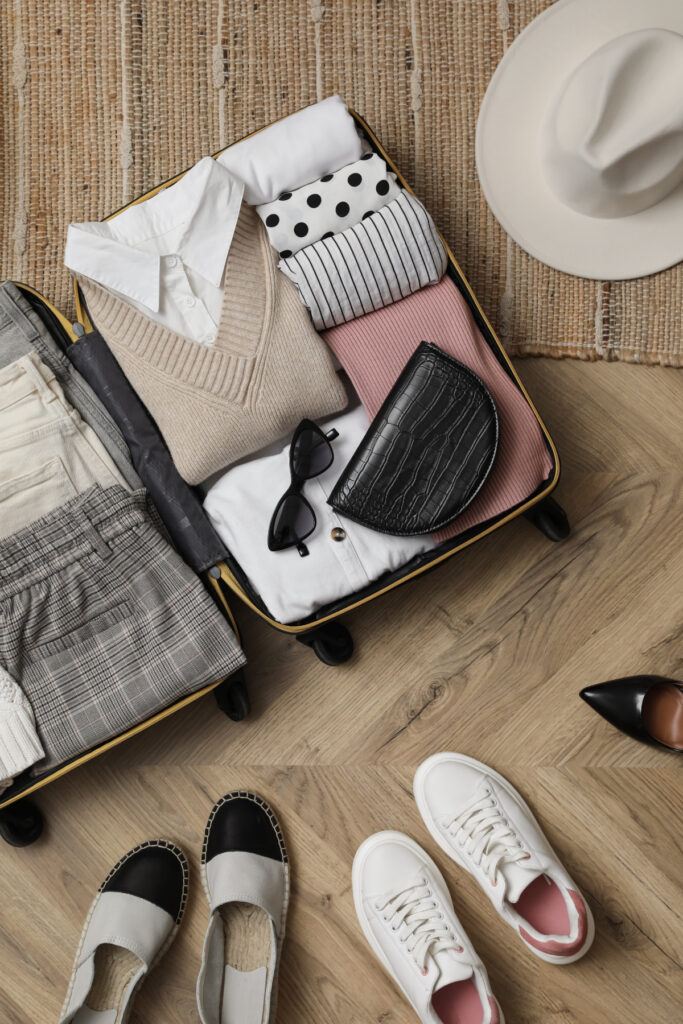
Let’s be honest, your luggage can make or break a trip. Hard-shell suitcases do a great job protecting fragile stuff, but they’re heavier than you’d think. Soft-sided bags? They’re far more forgiving when you’re squeezing in those last-minute souvenirs.
Always check airline size limits before you buy. Most carry-ons need to fit 22″ x 14″ x 9″—and if your bag’s too big, you’re just asking for a checked bag fee.
Four-wheel spinners glide through airports like a dream. Two-wheelers? They handle rough sidewalks better, but dragging them gets old fast.
Budget tip: Hunt for last season’s colors or models. Outlet stores and end-of-season sales can knock 40-50% off big brands—why pay full price?
Backpacks are a lifesaver if you’re walking a lot. Padded straps and lots of pockets are non-negotiable. A 40-50 liter pack is the sweet spot for a week’s worth of stuff, and you’ll dodge checked bag lines.
Luggage Scale for Weight Management

Nobody needs a $200 surprise at check-in, so toss a portable luggage scale in your bag. Airlines are ruthless with overweight fees, especially on international flights.
Digital scales run $10-20 and handle bags up to 110 pounds. Just hook, lift, and get your answer in seconds.
Mechanical scales are cheaper, but reading them isn’t always easy. At least you won’t need to worry about dead batteries halfway through a trip.
Test your scale at home with something you know the weight of. Some cheapies are off by a couple of pounds, which could still land you an overweight fee—ugh.
On your way home, pack the scale in your checked bag. Souvenirs seem to multiply, and you’ll probably need to shuffle things around to avoid extra charges.
Smart Item Choices for Savvy Travelers

Being picky about what goes in your suitcase keeps your costs down and your comfort up. It’s all about packing items that earn their keep and ditching anything that’s just dead weight.
Mix-and-Match Outfits and Layers

Building a capsule wardrobe around two main colors is honestly a game-changer. Neutrals like black, navy, or brown hide stains and match with everything, even if your style isn’t exactly Paris runway.
Stick to three buttons. Two pants and a skirt or dress give you tons of outfit combos. Jeans can handle sightseeing, light hikes, and dinner out.
Layering wins every time over heavy jackets. Instead, pack:
- One light cardigan or hoodie
- Two long-sleeve shirts
- Three tees or short-sleeved
- One warm base layer
This setup works for chilly AC in Bangkok or foggy San Francisco evenings. Plus, lighter fabrics dry fast, so you’re not stuck waiting for laundry.
Scarves are a total MVP. One scarf can dress up an outfit, double as a blanket on flights, cover your shoulders in temples, and add warmth without taking up space.
Packing Multipurpose Essentials

Skip single-use stuff! A $10 sarong does the work of a towel, beach blanket, and cover-up. It dries fast and takes up barely any room.
Your phone? It replaces a camera, alarm clock, flashlight, and even maps. Download offline maps before you go and dodge roaming charges.
Packing cubes are a $20 sanity-saver. They squeeze clothes down by about a third and keep everything sorted. No more digging for clean socks at the bottom of your bag.
Bring these dual-purpose items:
- Duct tape wrapped around a pencil for fixes on the go
- Dental floss for both repairs and, well, flossing
- Bandana for first aid, sweat, or just style
- Carabiners to clip bags or hang wet laundry
Your bag gets lighter, but you’re ready for almost anything.
Minimizing Toiletries and Liquids

Toiletries can weigh more than you’d think. A big shampoo bottle? That’s heavier than three t-shirts. Grab travel-size containers and refill them from your home stash.
Solid toiletries are genius. Shampoo bars, toothpaste tabs, and solid deodorant dodge the liquid rules and are spill-proof.
Double-duty products make your kit half the size:
- Castile soap for hair, body, and laundry
- Coconut oil for moisturizer and makeup remover
- Baking soda as a toothpaste and deodorant
Toss pills into tiny zip bags instead of hauling bottles. Works for vitamins, meds, and anything else you need.
Skip hotel duplicates. Most places already have soap, shampoo, and towels. Check your booking so you don’t waste space on stuff you’ll find there anyway.
No matter how long your trip, just pack a week’s worth of toiletries. You can always buy more on the road—usually for less than at home.
See Related: How to Plan a Vacation on a Budget While Enjoying Luxury Experiences for Half the Price
Frugal Laundry and Freshness Solutions

Keeping your clothes clean doesn’t have to be expensive or complicated. With a few tricks, you’ll stay fresh without paying for hotel laundry or lugging around half your closet.
Bringing Laundry Detergent Sheets

Laundry detergent sheets are a frugal traveler’s best friend. These featherweight strips dissolve in water and barely take up any room—seriously, they’re almost invisible in your bag.
A 50-pack runs about $8-12 and will last you ages. You’ll save a small fortune compared to buying detergent at your destination.
No leaks, work in hot or cold water, biodegradable, and perfect for washing in a sink. What’s not to love?
Keep them in a ziplock so they stay dry. One sheet does a sinkful, two sheets for the laundromat. If you’re pinching pennies, shave a bar of soap into flakes and pack those in a tiny container.
Separating Dirty and Clean Clothes

Nobody wants dirty socks mixing with clean shirts. Use a clean pillowcase as a laundry bag—it’s free and doubles as a backup pillowcase if you need it.
Compression bags are awesome for dirty laundry. They trap smells and shrink your laundry pile. A basic set costs $10-15 and lasts forever.
Try flipping lightly worn clothes inside out and packing them separately from the truly dirty stuff. You might get another wear or two out of them.
Other hacks: use different suitcase sections, stash dirty clothes in shower caps from hotels, repurpose grocery bags, or roll smelly stuff in a towel to contain odors.
A small mesh bag for socks and underwear is a lifesaver. It makes sink washing easy and keeps you from losing tiny items.
Travel-Friendly Freshness Hacks
You don’t need fancy sprays to keep your clothes smelling okay. Toss a dryer sheet into your bag—it fights musty odors for pennies.
Steam out wrinkles by hanging clothes in the bathroom while you shower. The steam does the work, no iron needed.
Sunlight is underrated. Hang clothes by a window or on a balcony for half an hour, and they’ll smell way better.
DIY freshness tricks:
- Baking soda in a sock to soak up smells overnight
- Hand sanitizer for emergency sweat stains
- Travel-size white vinegar to neutralize odors
- Baby powder to freshen clothes between washes
A drop of essential oil on a cloth goes a long way. Lavender or tea tree oil costs under $5 and lasts forever.
Roll your clothes instead of folding. It’s old-school, but it really does cut down on wrinkles.
Eco-Conscious and Money-Saving Packing Habits

Eco-friendly packing isn’t just good for the planet—it’s a serious wallet saver, too. Reusable gear pays for itself, and you’ll feel better about your footprint every time you travel.
Reusable Water Bottle Strategies

A sturdy reusable water bottle is hands-down the best travel investment you’ll make. Skip $2-5 bottles every day and you’ll save $60-150 on a three-week trip. Not bad for something that lasts years.
Collapsible silicone bottles are great for backpackers. Stainless steel insulated bottles keep drinks cold or hot for ages. Wide mouths make cleaning and adding ice easy.
Airports now have hydration stations everywhere. Apps like HidrateSpark or Refill help you find free water in new cities.
If you’re worried about tap water, bring purification tablets or a UV sterilizer. For under $30, you’ll never have to buy bottled water again.
Try freezing your bottle before a flight. Security lets solid ice through, and you’ll have cold water once it melts.
Reducing Single-Use Plastics

Disposable stuff adds up fast. A family could blow $200 on throwaway plates and utensils in just a week.
Pack a lightweight camping mess kit with reusable plates and cutlery. Sets run $15-25 and last for years.
| Item | Single-Use Cost | Reusable Alternative | Break-Even Point |
|---|---|---|---|
| Plastic bags | $0.10 each | Silicone bags ($12) | 120 uses |
| Disposable plates | $0.25 each | Camping plate ($3) | 12 uses |
| Plastic utensils | $0.05 each | Travel cutlery ($8) | 160 uses |
Mesh produce bags for groceries and silicone food bags for snacks are awesome. You’ll skip hundreds of plastic bags over time.
If you love coffee, a collapsible cup is a must. Some cafés even give discounts for bringing your own.
Packing for Health and Comfort

Staying healthy on the road means fewer ruined days and less wasted money. A little prep goes a long way.
Pack a basic first aid kit with bandages, painkillers, and antiseptic wipes. Buying these abroad can cost three to five times more.
Toss in probiotics and electrolyte packets to keep your stomach and hydration in check. A few bucks here can save you a fortune later.
Moisture-wicking underwear and merino wool socks are worth every penny. They fight odors and dry fast, so you can pack less and wash less.
Compression socks on long flights? Total game changer. Your legs stay happy, and you’ll feel way better when you land.
Bring a portable phone charger—airport prices are a rip-off, and you don’t want to risk a dead phone. Get one with a couple of ports so you can charge everything at once.
See Related: Simple Frugal Living Hacks at Home That Transform Your Finances Fast
Frequently Asked Questions

Smart packing can save you $50-200 per trip just by dodging checked bag fees, avoiding last-minute purchases, and squeezing more into your luggage. Here are a few questions I get all the time about packing smarter and cheaper.
How can I pack my suitcase more efficiently to save space and money?
Rolling your clothes saves about 30% more space than folding. More room in your carry-on means you can skip those $35-75 checked bag fees.
Put your heaviest stuff—shoes, books—near the wheels at the bottom. This keeps clothes from getting wrinkled and your bag from tipping over.
Use every nook and cranny. Stuff socks in your shoes, tuck underwear in the corners, and fill gaps with chargers or small items.
Compression bags are brilliant for bulky stuff like sweaters. They shrink clothes by up to 50%, and a set of three only costs $10-15.
What are the most cost-effective ways to organize my luggage?
Let’s be real, packing cubes are a game-changer. You can usually grab a whole set for $15-25, and they keep everything tidy and compressed. Sometimes, you even get to ditch the bigger suitcase for a medium one, which is just… satisfying.
Clear ziplock bags work shockingly well as organizers for cables, toiletries, and all those little things that love to disappear. A box of gallon-sized bags costs about $3, and honestly, they do almost the same job as those fancy travel pouches.
I love repurposing stuff like pill organizers for jewelry or charging cords. Why spend on specialty travel containers when you’ve probably got something at home that’ll do the trick? Plus, you’re less likely to lose those tiny things.
Jot down a simple packing list on your phone. I can’t count how many times this has saved me from buying doubles of stuff I already own.
Can you share some tips for minimizing expenses with smart packing techniques?
Pack a collapsible water bottle—seriously, it’s a must. Those airport drinks? Pricey. With a bottle, you’ll save $3-5 a day, which adds up fast on a longer trip.
Toss a small laundry bag and a tiny bottle of detergent in your bag. Doing a quick wash in the hotel sink means you can pack less and skip those outrageous hotel laundry fees.
Snacks from home are a lifesaver. A $2 granola bar at the grocery store morphs into a $6 airport “treat,” so just bring your own and pocket the difference.
Don’t forget a universal adapter. Buying one at the airport? Ouch. They’ll charge you three or four times what you’d pay online or at home.
How might one pack toiletries to save space and avoid unnecessary expenses while traveling?
Skip the overpriced travel-sized bottles at the store. Pour your shampoo, conditioner, and body wash into 3-ounce containers, and you’ll easily save $15-20 per trip. Travel-sized products are such a ripoff per ounce.
Solid toiletries are a frugalist’s best friend. Shampoo bars, toothpaste tablets, and solid deodorants don’t count toward your liquid limit, and you won’t have to stress about leaks.
Contact lens cases are perfect for small amounts of moisturizer or foundation. One case holds enough for a week and barely takes up any space.
Bring your towel or washcloth, especially if you’re staying somewhere cheap. Some budget accommodations charge for towels (wild, right?). A quick-dry towel only costs $10-15 and pays for itself almost instantly.
What strategies are there for packing clothes to reduce luggage size and possibly avoid checked bag fees?
Pick 2-3 colors for your clothes so everything mixes and matches. You’ll pack less but still have plenty of outfit options. Honestly, it’s kind of fun to see how many combos you can create.
Go for layers instead of packing one giant coat. A base layer, sweater, and a packable jacket take up way less space and cover you for most weather.
Wear your bulkiest stuff—think boots or thick jackets—on the plane. It frees up space in your bag and helps you dodge those annoying weight limits.
I’m a huge fan of multi-use items. A sarong can be a towel, blanket, or cover-up, and it means you need to bring less overall. It’s all about making every item in your bag earn its keep.
What are some creative hacks for packing that enhance the travel experience without breaking the bank?
Honestly, I swear by using a cheap pill organizer for jewelry. Toss in your earrings, rings—whatever tiny bits you’ve got—and you’ll find them later instead of untangling a mess. You can grab one at any pharmacy, usually for just a couple of bucks.
Here’s one I learned the hard way: wrap a bit of duct tape around a pencil. It barely takes up any space, and you’ll be grateful when your zipper betrays you or your bag’s handle decides to give up halfway through your trip.
I always throw in a few dryer sheets. Just tuck one into each packing cube or corner of your bag. Your clothes will smell like home, not like that weird hotel closet, and you won’t have to deal with static cling.
Don’t forget a collapsible tote bag. Seriously, these things are magic. They squish down to nothing, but when you need to haul back souvenirs or stash your dirty laundry, you’ll be so glad you packed one. No need to fork over extra cash for another checked bag.
Leave a Reply